Forms of the Plane · 3D
Borromean Rings
Three rings, linked only all together
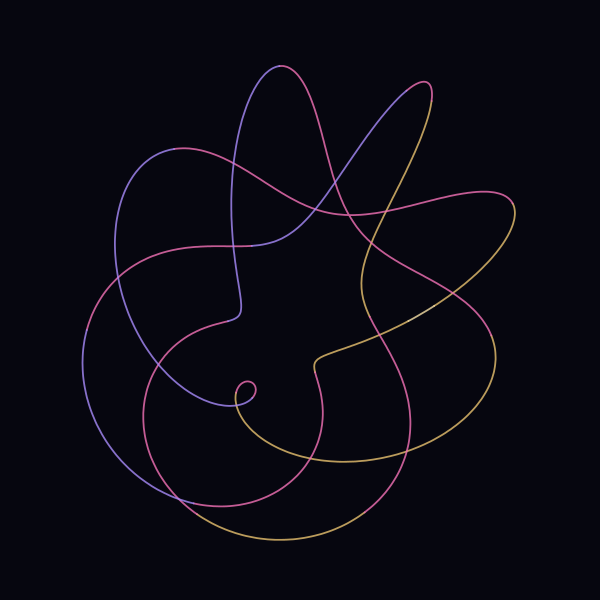
Three rings bound together, yet no two of them are linked: remove any one and the other two fall apart. Seen from above they are the triquetra’s three circles.
- Rings
- 3
- Linked pairs
- 0
- Crossings
- 6
Turn it in your hands, strike it to hear the chord of its edges, and slice it with a plane.
Facts
- Each ring passes over the next and under the one before, at both of their crossings.
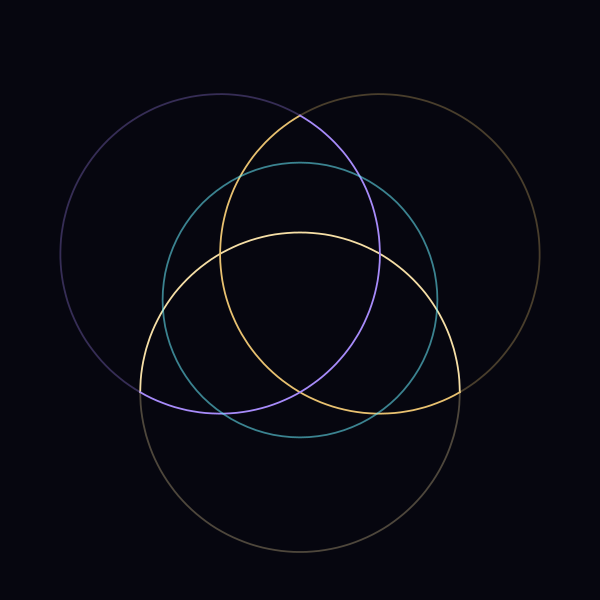
- From directly above, the rings project exactly onto the three circles of the triquetra.
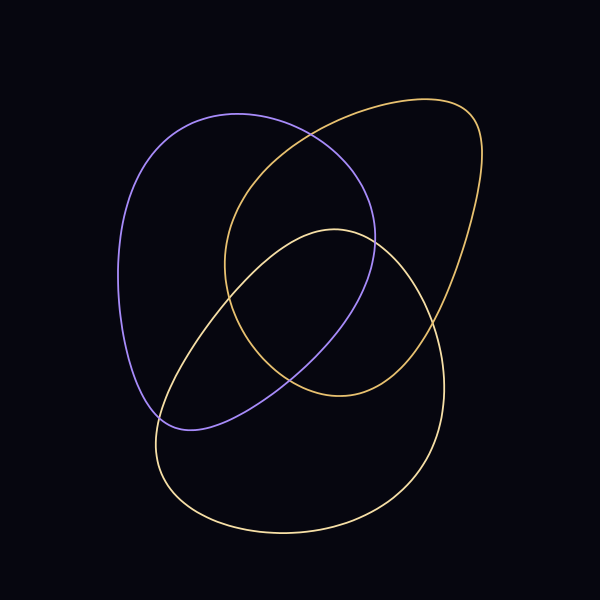
- Perfectly round, flat circles can never form Borromean rings: the rings must bend (Freedman and Skora, 1987).
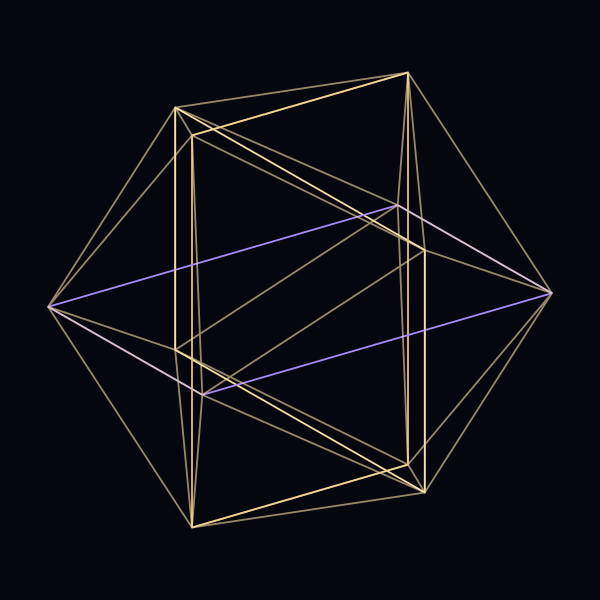
- Three golden rectangles at right angles, as in the icosahedron, are Borromean too.
History and meaning
The link is old. Norse picture stones of the 7th century carve it as the valknut, three linked triangles. A 13th-century French manuscript labels three such rings as the Trinity: three that are one, where none holds without the others. The name comes from the Borromeo family of northern Italy, who bore the rings on their coat of arms.
Across the dimensions
- Its shadow TriquetraBend each circle over the next and under the last: the three become Borromean rings, linked only all together.