Journey 9 of 10 · 7 steps
Kepler’s Stars
Faces that meet again beyond the solid
Extend the faces of a solid past its edges until they meet once more. Out of the dodecahedron and the icosahedron come four regular stars, found by Kepler and Poinsot two centuries apart.
In the app each step moves: figures draw themselves, rise from the page, turn and slice, and the narration can be read aloud. Here they are held still, one picture each.
-
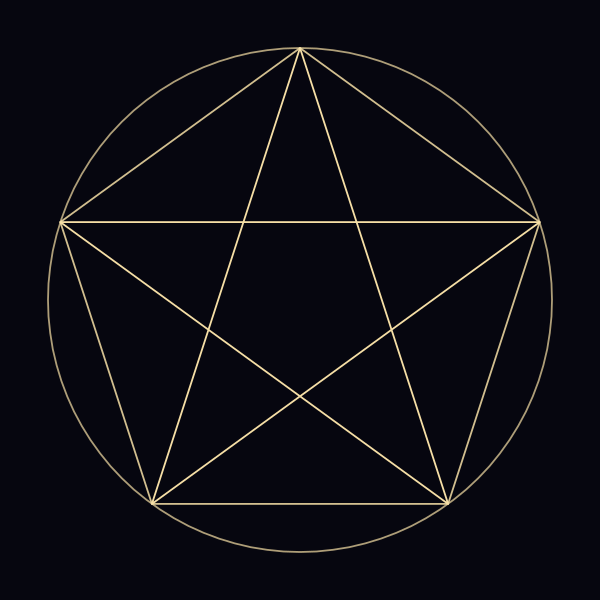
Step 1 · Pentagram
Stellation in the plane
Extend the five sides of a pentagon and they meet again in five points: the pentagram. Stellation is this one move, made in space.
-
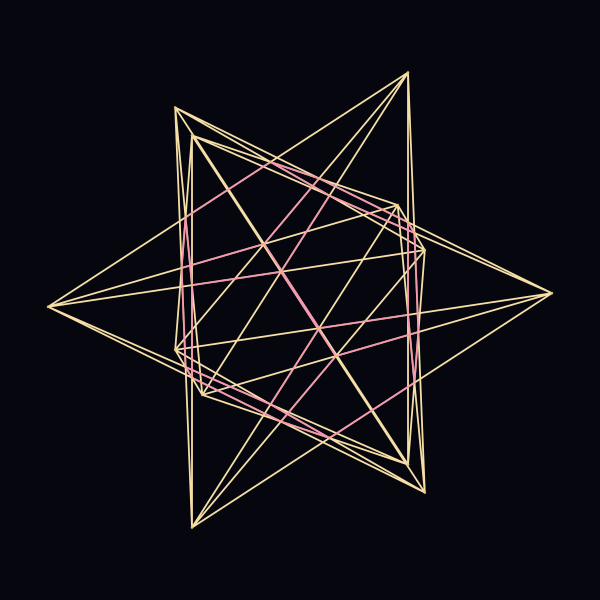
Step 2 · Pentagram
Twelve pentagrams
Twelve of these stars, set in the planes of a dodecahedron’s faces, close into a solid of sixty golden spikes.
-
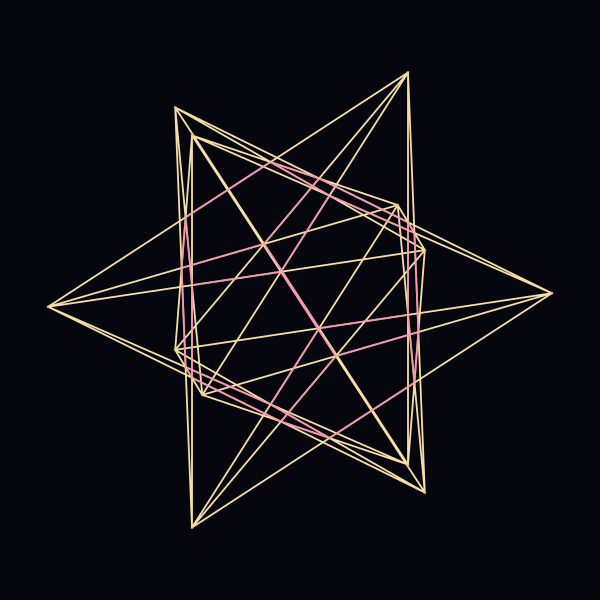
Step 3 · Small Stellated Dodecahedron
Kepler’s urchin
The small stellated dodecahedron, with the dodecahedron whose faces it extends still glowing inside. Kepler described it in 1619.
-
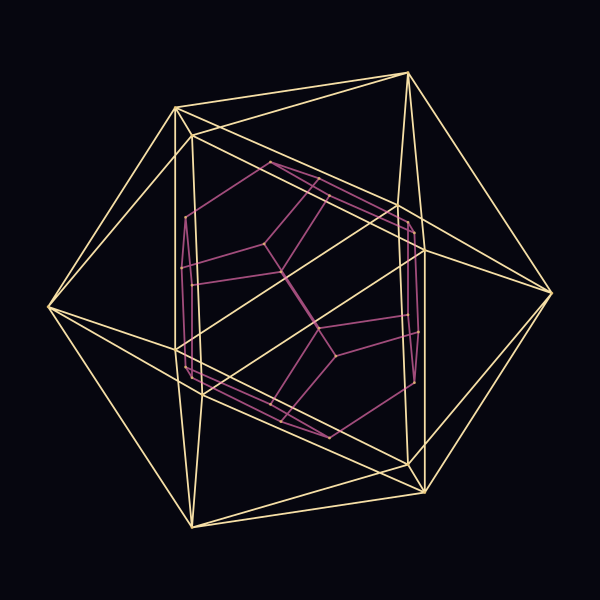
Step 4 · Great Dodecahedron
Pentagons that pass through each other
Extend the faces further and they meet again: twelve pentagons through the corners of an icosahedron, each cutting through its neighbours. Poinsot found this one in 1809.
-
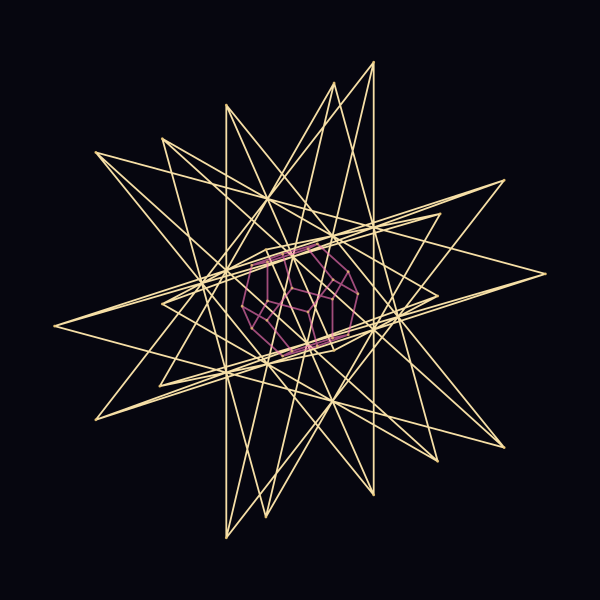
Step 5 · Great Stellated Dodecahedron
The last stellation
Once more, and the faces close for the final time: twenty spikes on the corners of a dodecahedron, each a pyramid of golden triangles.
-
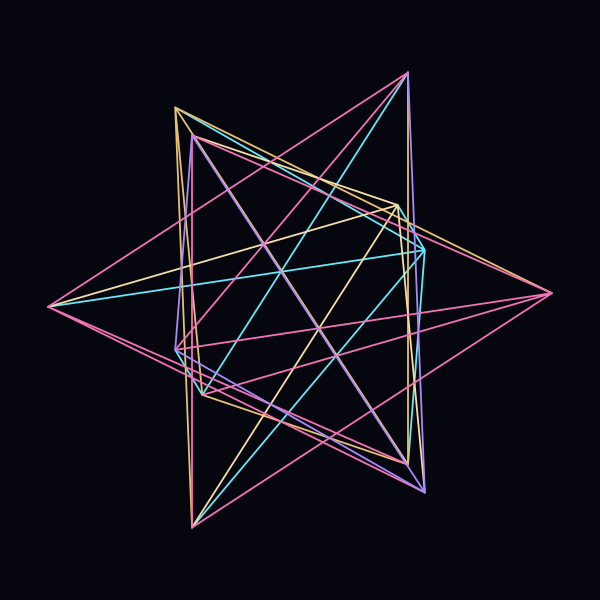
Step 6 · Great Icosahedron
Stars of triangles
The icosahedron has its own great star: twenty triangles crossing seven layers deep around the centre. It shares its twelve corners and thirty edges with Kepler’s urchin.
-
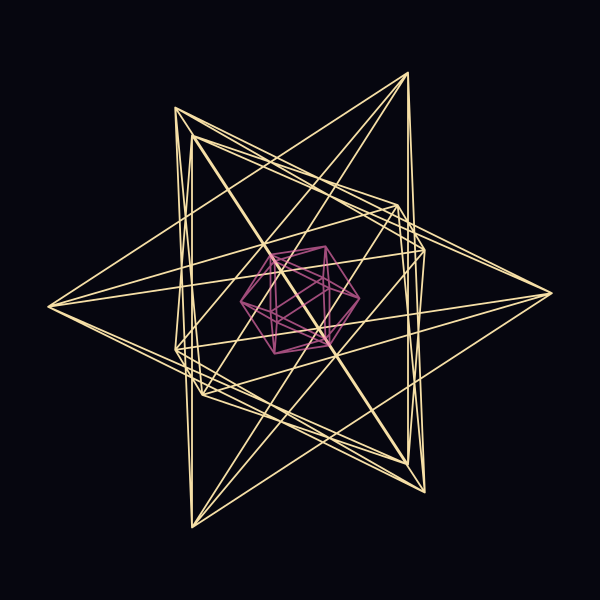
Step 7 · Great Icosahedron
Only four
In 1813 Cauchy proved these four are all the regular stars there can be. Five convex solids, four stars: nine regular polyhedra in all. Explore the stars