Kepler–Poinsot Solids · 3D
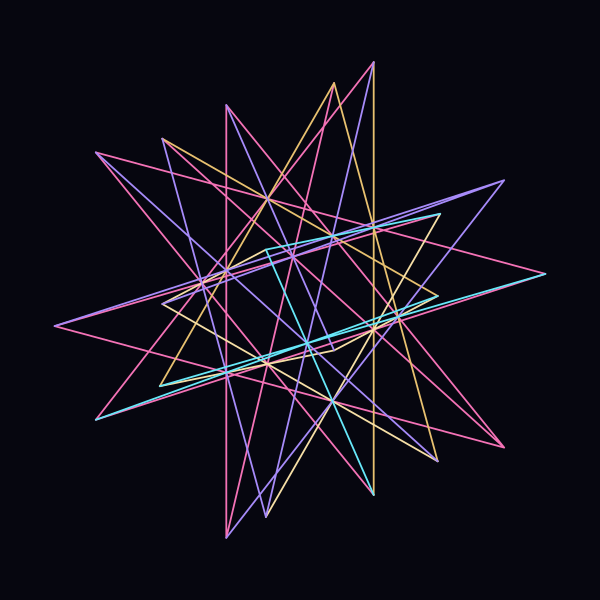
Small Stellated Dodecahedron
{5/2, 5} · Kepler’s urchin
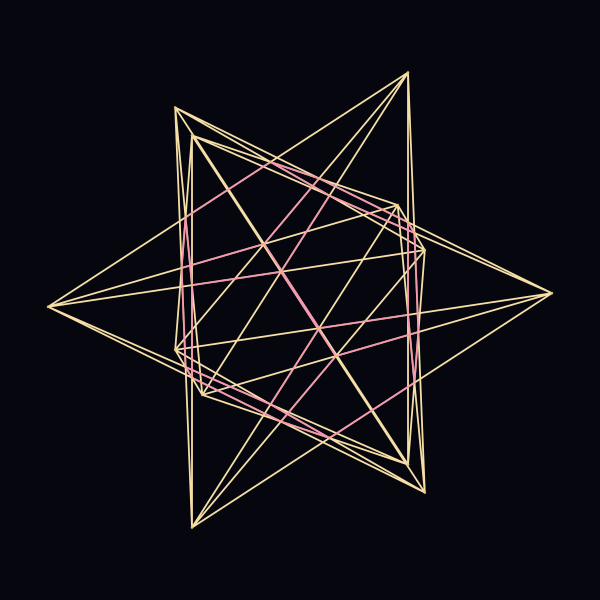
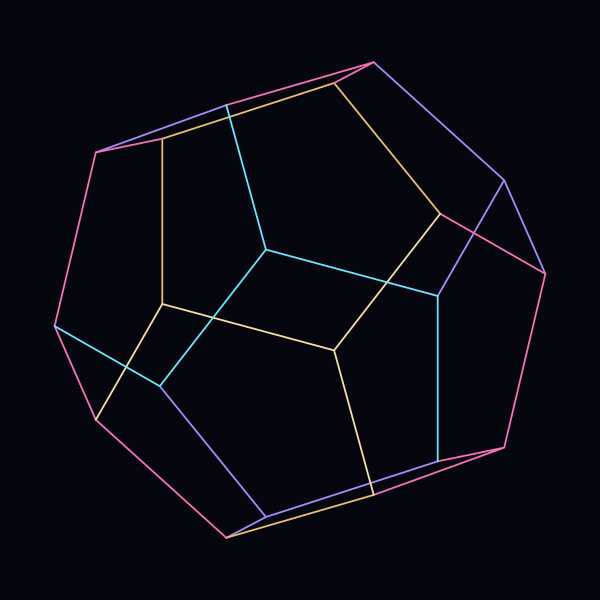
Extend the faces of a dodecahedron until they meet again: twelve pentagrams, sixty golden spikes. The first of Kepler’s star polyhedra.
- Vertices
- 12
- Edges
- 30
- Faces
- 12 {5/2}
- Density
- 3
Turn it in your hands, strike it to hear the chord of its edges, slice it with a plane.
Facts
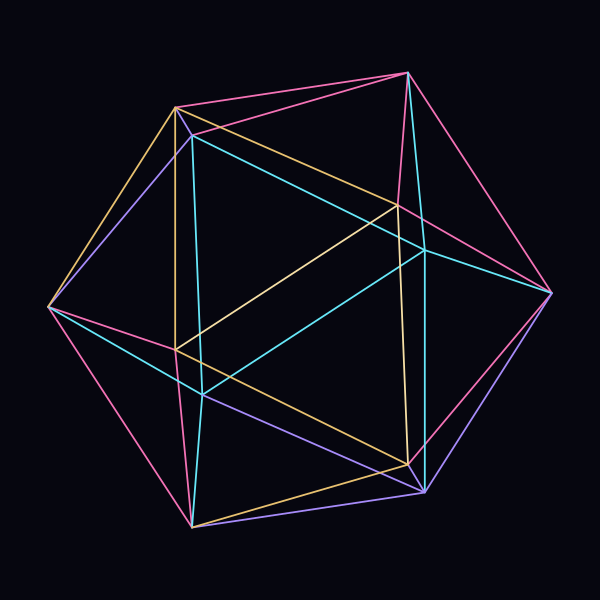
- Its 12 points are the corners of an icosahedron.
- Each face is a pentagram, so φ appears on every edge.
- Its faces cross, wrapping the centre three times (density 3), and V − E + F = 12 − 30 + 12 = −6: Euler’s formula fails, and Schläfli refused to call it a polyhedron at all.
- Kepler described it in 1619, and Uccello drew one in a mosaic in St Mark’s, Venice, around 1430.
History and meaning
Kepler called these star polyhedra the “urchins”. Poinsot found two more in 1809, completing the four Kepler–Poinsot solids.
Across the dimensions
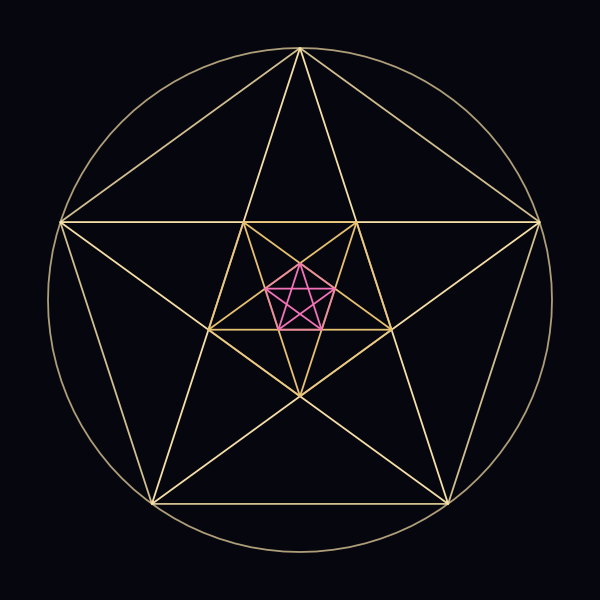
- Its slice PentagramThe pentagram is one face of the small stellated dodecahedron: twelve pentagrams, extended through space, close around it.
- Dual Great Dodecahedron
Learn it step by step
- Journey Kepler’s StarsStep 3: Kepler’s urchin