Kepler–Poinsot Solids · 3D
Great Dodecahedron
{5, 5/2}
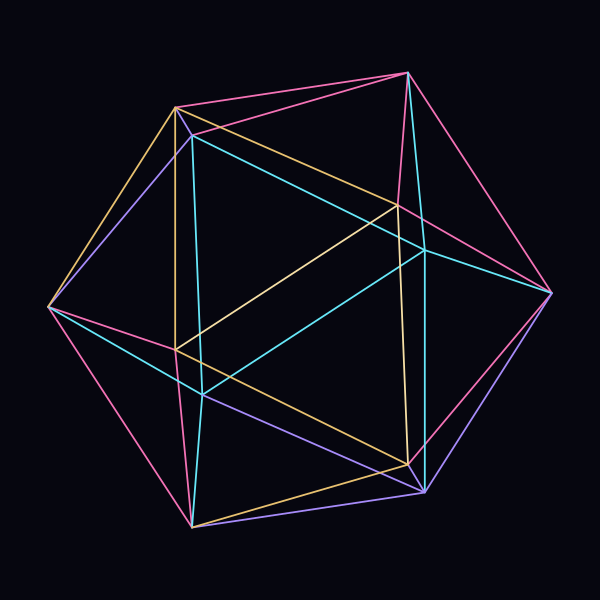
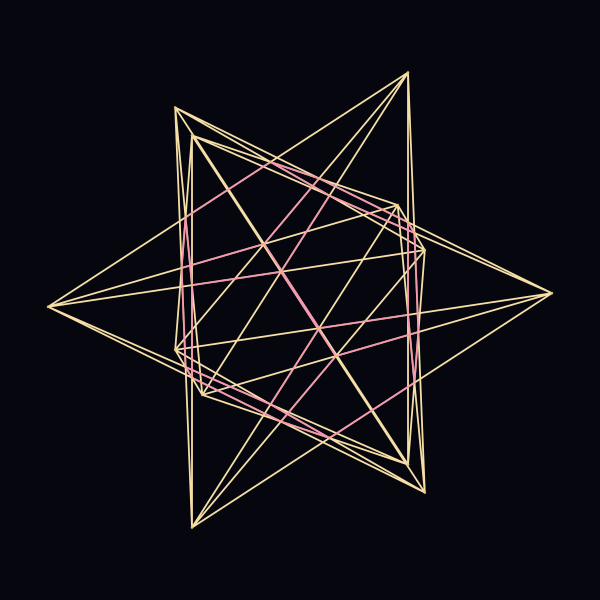
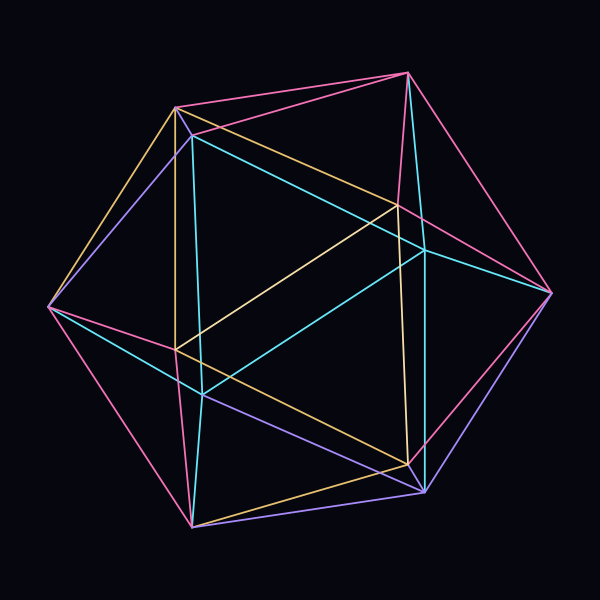
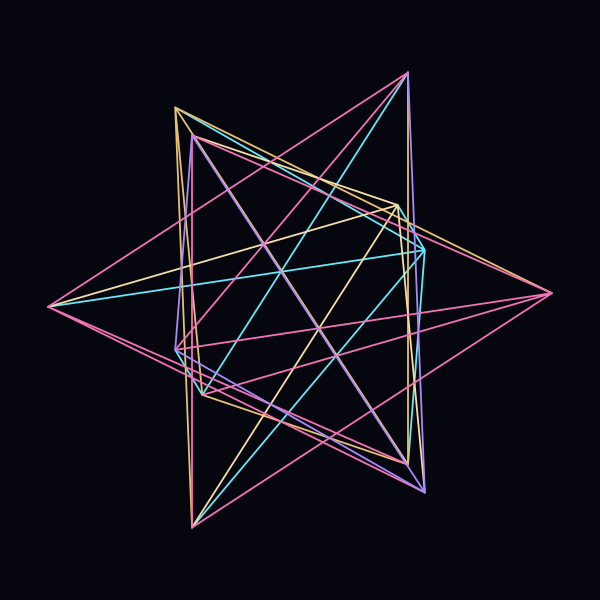
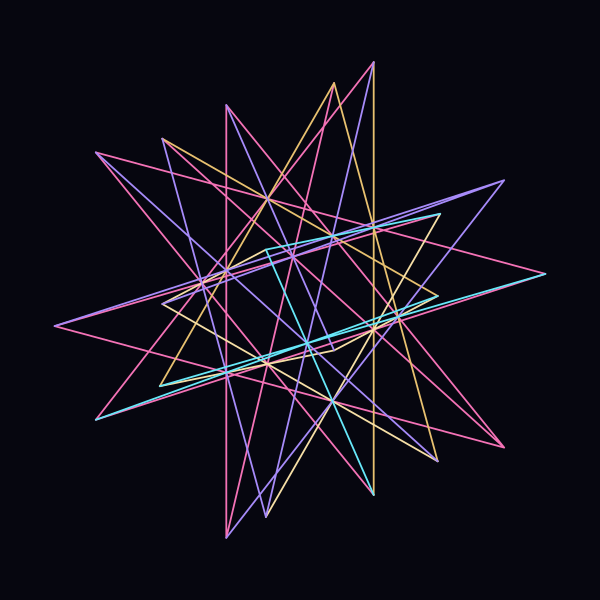
Twelve pentagons through the icosahedron’s corners, five at each, every one passing through the others. It looks like an icosahedron with each face pressed in.
- Vertices
- 12
- Edges
- 30
- Faces
- 12 ⬟
- Density
- 3
Turn it in your hands, strike it to hear the chord of its edges, slice it with a plane.
Facts
- It has the icosahedron’s 12 corners and 30 edges, but pentagons in place of triangles.
- Around each corner its five faces wind twice: the corner’s outline is a pentagram.
- Its faces lie in the planes of a dodecahedron’s faces: it is the second stellation of the dodecahedron.
- It is the dual of the small stellated dodecahedron. Both give V − E + F = 12 − 30 + 12 = −6, not 2.
History and meaning
Louis Poinsot found it and the great icosahedron in 1809, two centuries after Kepler’s two stars. Four years later Cauchy proved there can be no others: these four are all the regular star polyhedra.
Across the dimensions
Learn it step by step
- Journey Kepler’s StarsStep 4: Pentagons that pass through each other