Kepler–Poinsot Solids · 3D
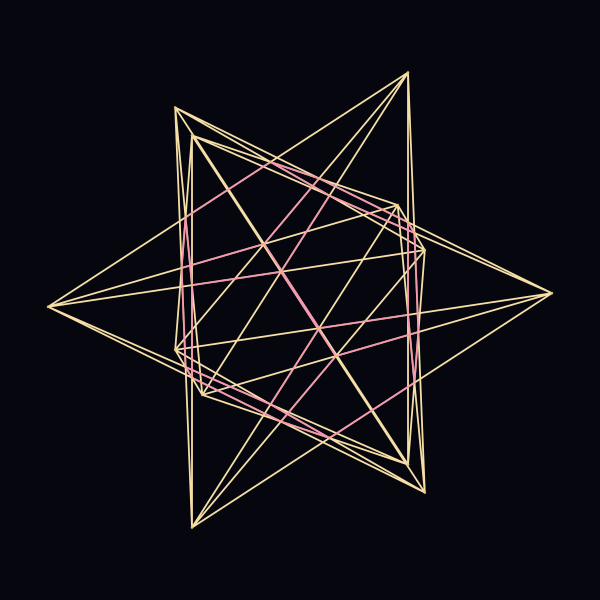
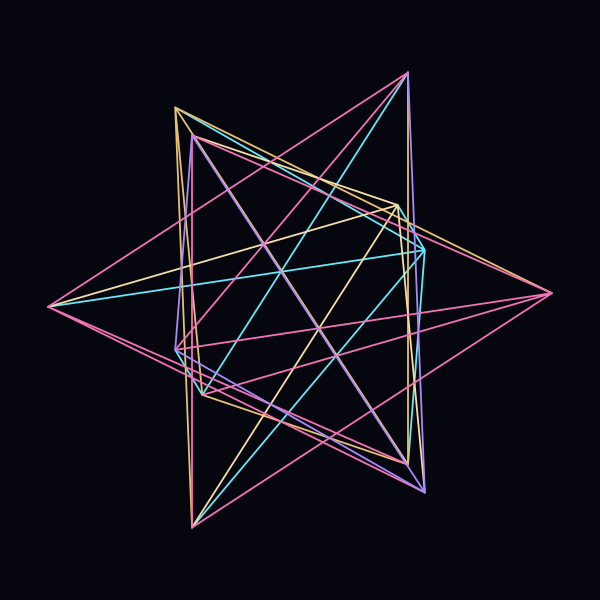
Great Stellated Dodecahedron
{5/2, 3}
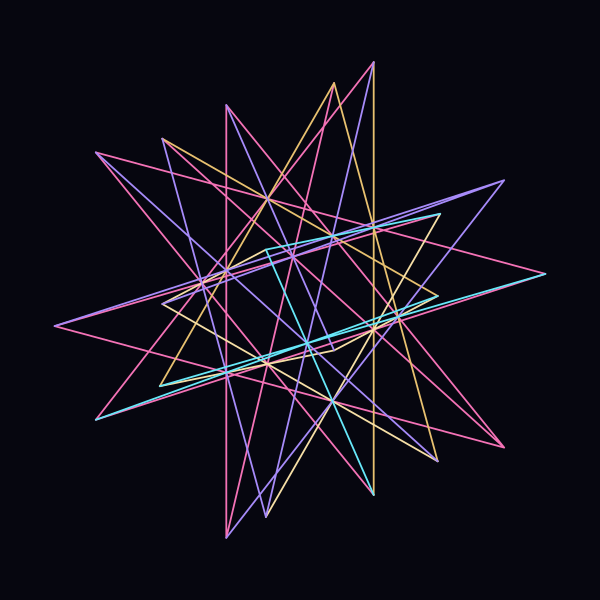
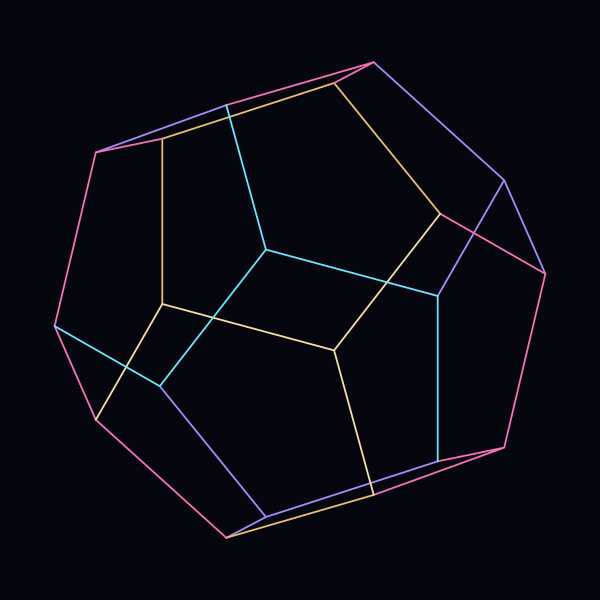
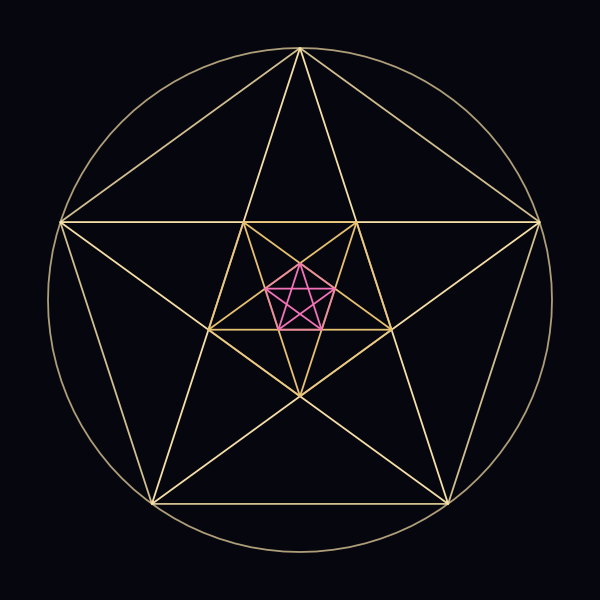
Twenty long golden spikes: twelve pentagrams whose points lie on the corners of a dodecahedron, three meeting at each. The last and largest stellation of the dodecahedron.
- Vertices
- 20
- Edges
- 30
- Faces
- 12 {5/2}
- Density
- 7
Turn it in your hands, strike it to hear the chord of its edges, slice it with a plane.
Facts
- Its 20 points are the corners of a dodecahedron, and three pentagrams meet at each one.
- Every spike is a three-sided pyramid of golden triangles: the points of the pentagrams.
- It is the third and final stellation of the dodecahedron, and the dual of the great icosahedron.
- Its faces wrap its centre seven times. Unlike its smaller sibling it obeys Euler: 20 − 30 + 12 = 2.
History and meaning
Kepler described it in Harmonices Mundi (1619) with the small stellated dodecahedron. Poinsot found it again in 1809, and in 1859 Arthur Cayley gave all four the names they carry today.
Across the dimensions
- Dual Great Icosahedron
Learn it step by step
- Journey Kepler’s StarsStep 5: The last stellation