Archimedean Solids · 3D
Vector Equilibrium
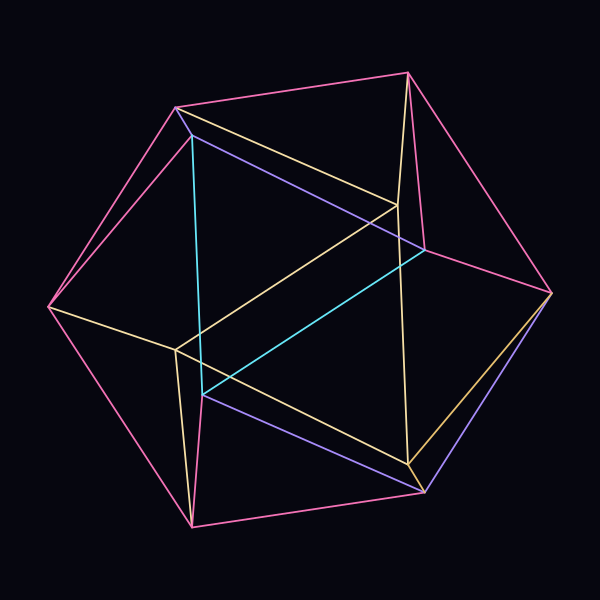
Cuboctahedron · 3.4.3.4
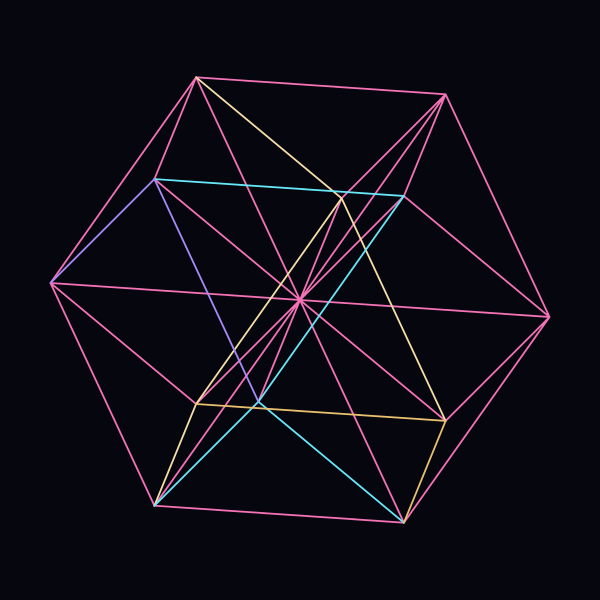
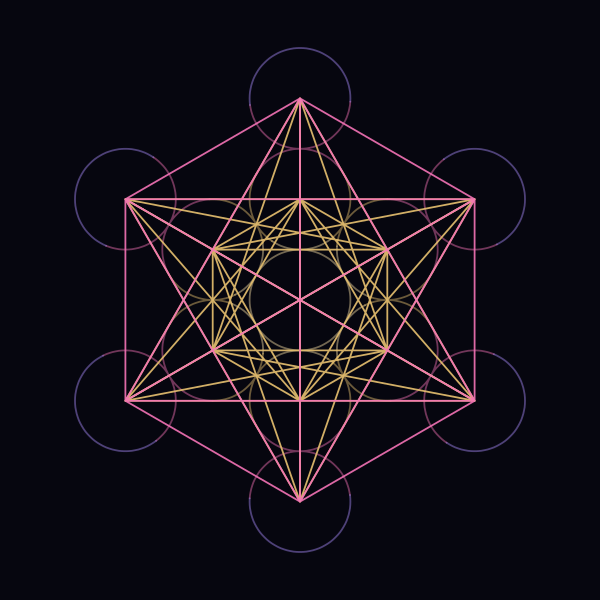
Eight triangles and six squares, twelve corners all at the same distance from the centre as from each other. Fuller called it the vector equilibrium: the one shape in which every force is in balance.
- Vertices
- 12
- Edges
- 24
- Faces
- 8 ▲ + 6 ■
- Edge = radius
- yes
Turn it in your hands, strike it to hear the chord of its edges, slice it with a plane or lift it into four dimensions.
Facts
- Its edge length equals its radius: the twelve radial lines are as long as the edges.
- Its twelve corners are the centres of twelve spheres packed around one.
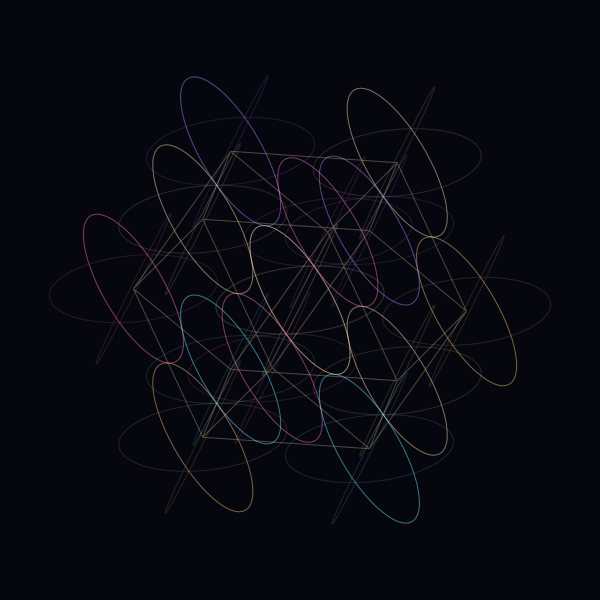
- The four hexagons through its centre (the radial planes) form its equators.
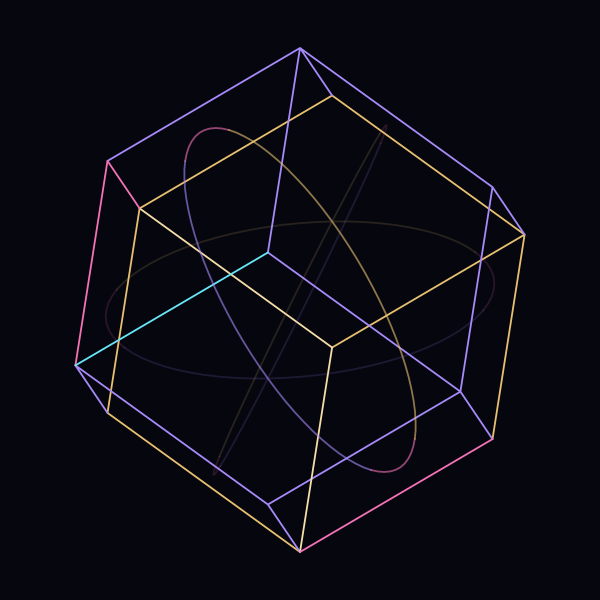
- Its dual is the rhombic dodecahedron, the cell that fills space in that packing.
- Cut the 24-cell through its middle and this is the solid you find.
History and meaning
Archimedes described it among his thirteen semi-regular solids. Buckminster Fuller made it the zero point of his synergetic geometry: twist it and it collapses through the icosahedron into the octahedron (the Jitterbug).
Across the dimensions
- Equator of 24-CellCut the 24-cell through its middle and the vector equilibrium appears: it is the 24-cell’s equator.
- Dual Rhombic Dodecahedron
Learn it step by step
- Journey The Archimedean FamilyStep 5: The vector equilibrium