Catalan Solids · 3D
Rhombic Dodecahedron
The cell of the densest sphere packing
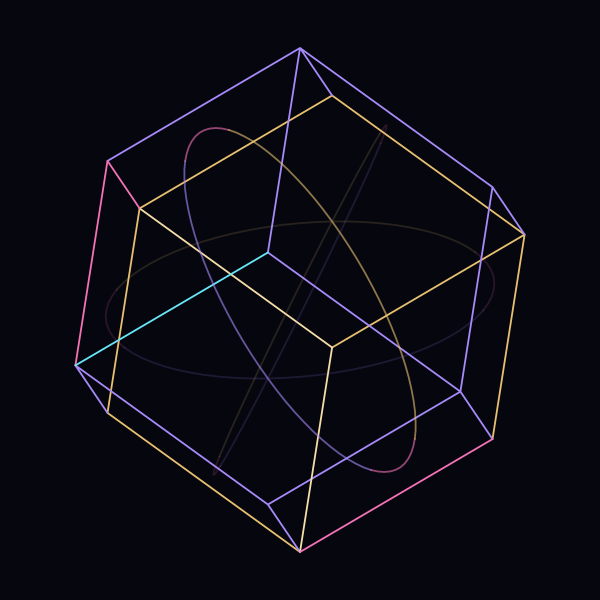
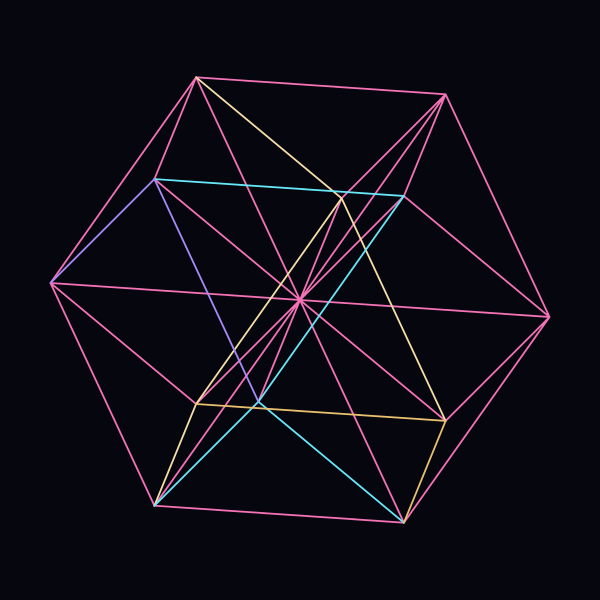
Twelve identical rhombi. Pack spheres as densely as possible and give each one all the space closer to it than to any other: every sphere gets exactly this cell, and the cells fill space with no gaps.
- Vertices
- 8 + 6
- Edges
- 24
- Faces
- 12 rhombi
- Diagonals
- 1 : √2
Turn it in your hands, strike it to hear the chord of its edges, slice it with a plane or lift it into four dimensions.
Facts
- It is the Voronoi cell of the face-centred cubic packing: its sphere touches all twelve faces.
- Its vertices are a cube’s eight corners plus an octahedron’s six.
- It fills space by itself, like the cube: honeybee cells end in three of its rhombi.
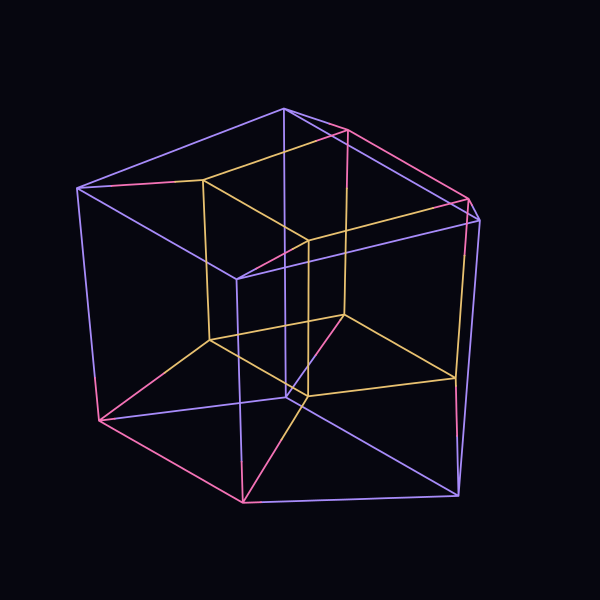
- Seen corner-first, the tesseract’s shadow is exactly this solid.
- Garnet crystals often grow in this shape.
History and meaning
Kepler described it in 1611 in his essay on the six-cornered snowflake, where he also guessed that the densest packing of spheres is the one this cell describes. That guess took until 1998 (and a computer) to prove.
Across the dimensions
- Shadow of TesseractLook at the tesseract corner-first and its shadow is exactly the rhombic dodecahedron.
- Dual Vector Equilibrium