Journey 7 of 10 · 7 steps
Sound Made Visible
Cymatics and the music of shapes
From Chladni’s sand patterns to the chords hidden inside solids: vibration draws geometry, and geometry sings.
In the app each step moves: figures draw themselves, rise from the page, turn and slice, and the narration can be read aloud. Here they are held still, one picture each.
-
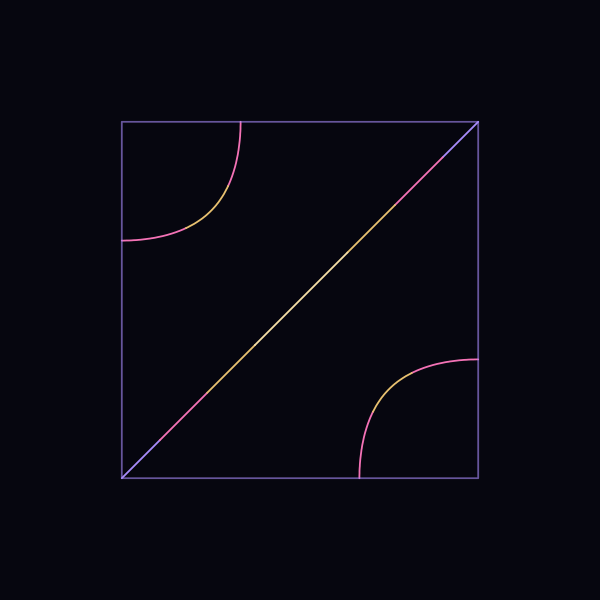
Step 1 · Chladni Figure
Sand on a plate
In 1787 Ernst Chladni sprinkled sand on a metal plate and drew a violin bow along its edge. The sand jumped away from the vibrating parts and settled on the lines that stayed still.
-
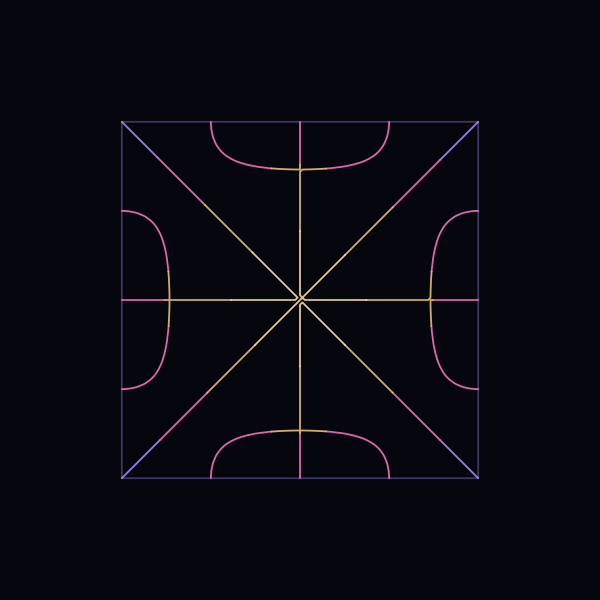
Step 2 · Chladni Figure
Higher notes
Raise the pitch and the plate divides into more and smaller regions, and the nodal lines grow more intricate.
-
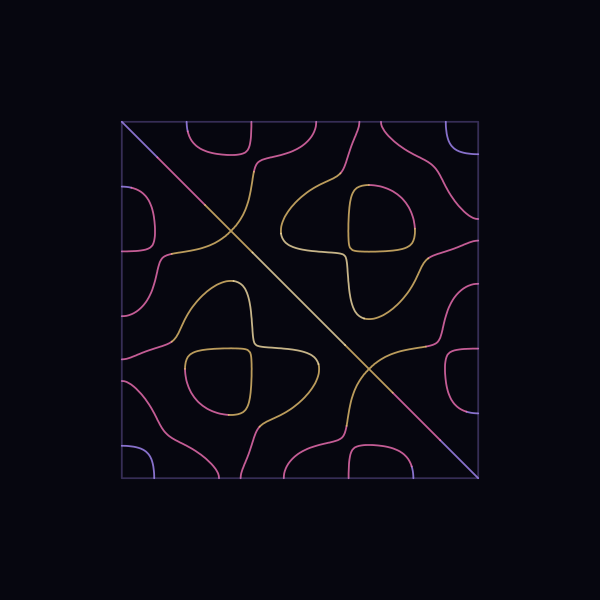
Step 3 · Chladni Figure
Symmetry
On a square plate, patterns (n, m) and (m, n) share the same pitch, so they mix, adding and subtracting into these interlaced figures.
-
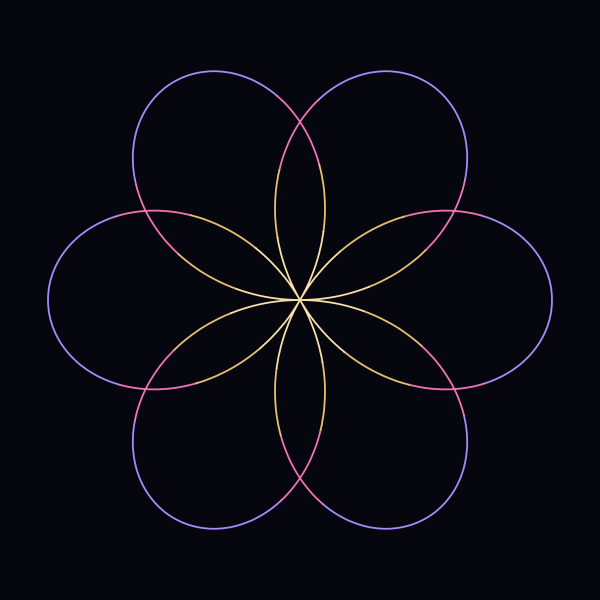
Step 4 · Rhodonea Rose
Ratios make form
Simple number ratios make simple, closed forms. It is the same reason a musical fifth (3 : 2) sounds consonant.
-
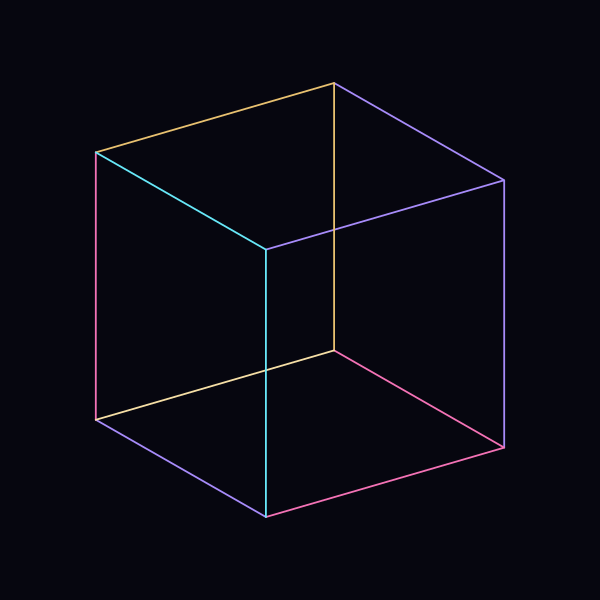
Step 5 · Cube
Shapes that ring
The other way round: treat every edge of a solid as a spring and every corner as a mass. It rings at its own set of frequencies. The cube’s partials are in the ratios 1 : √2 : √3. Tap the figure to hear it.
-
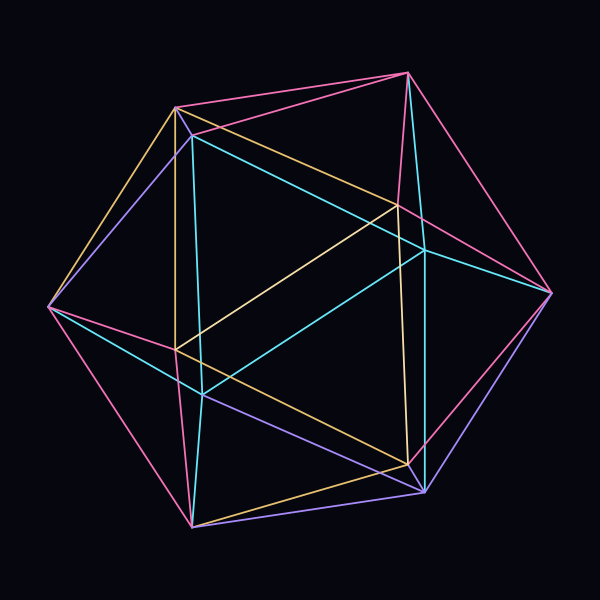
Step 6 · Icosahedron
A golden chord
The icosahedron’s frequencies involve √5: its partials carry the golden ratio. Every figure in the library has a voice. Try the scanner and drone in Explore.
-
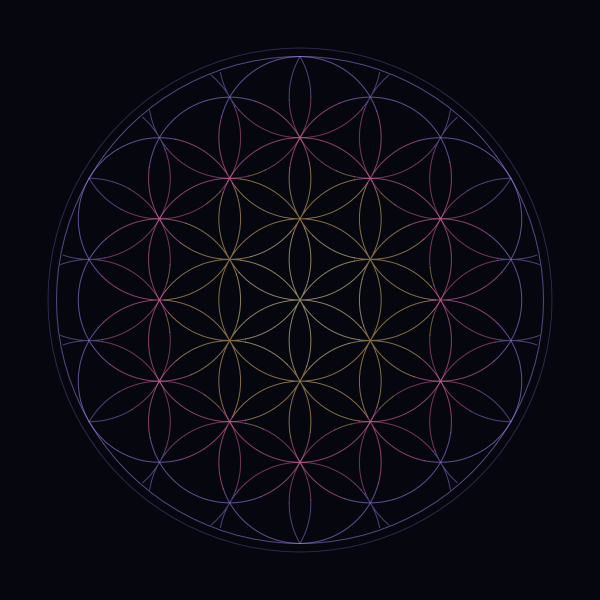
Step 7 · Flower of Life
Close the loop
Send any shape’s chord to the Chladni plate and see what pattern its sound draws. Shape becomes sound becomes shape. Open Cymatics