Archimedean Solids · 3D
Rhombicuboctahedron
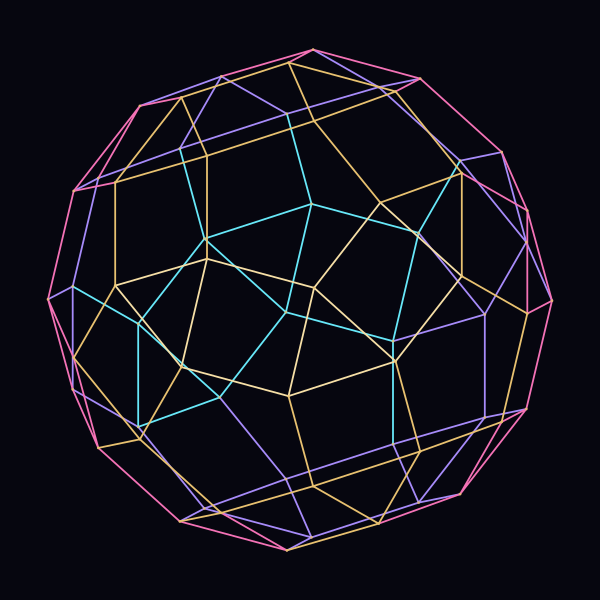
3.4.4.4 · rr{4,3}
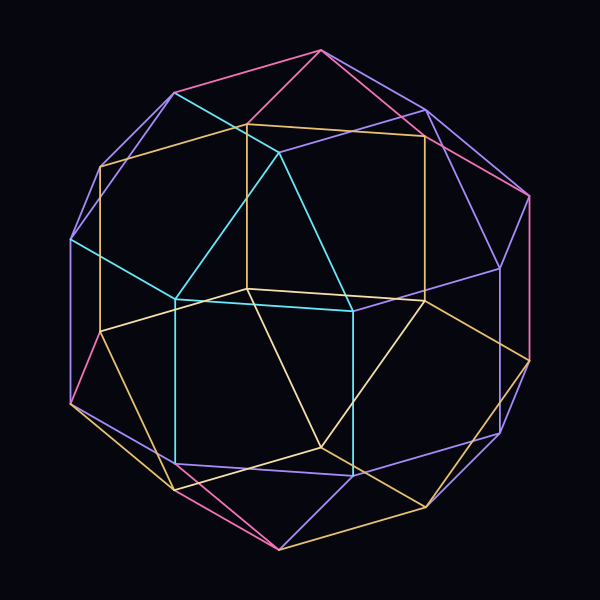
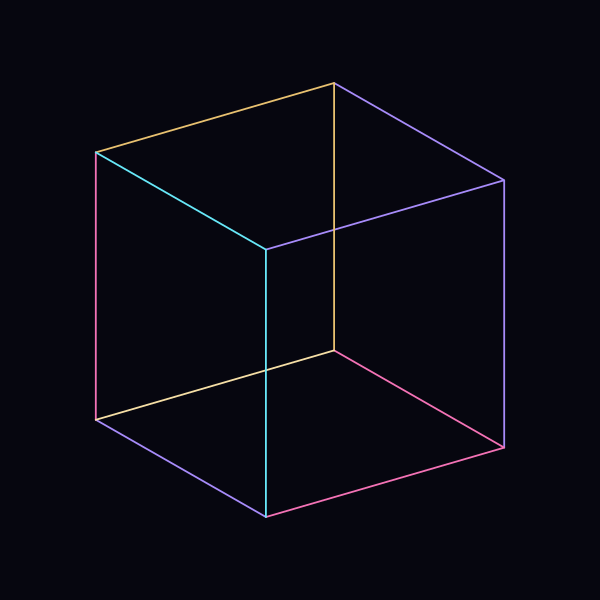
Eight triangles and eighteen squares: push the six faces of a cube outward, then fill the gaps between them. Squares cover the old faces and edges, triangles the old corners.
- Vertices
- 24
- Edges
- 48
- Faces
- 8 ▲ + 18 ■
Turn it in your hands, strike it to hear the chord of its edges, slice it with a plane.
Facts
- Of its 18 squares, 6 face the cube’s faces and 12 lie across its edges.
- Three belts of eight squares girdle it, one around each axis.
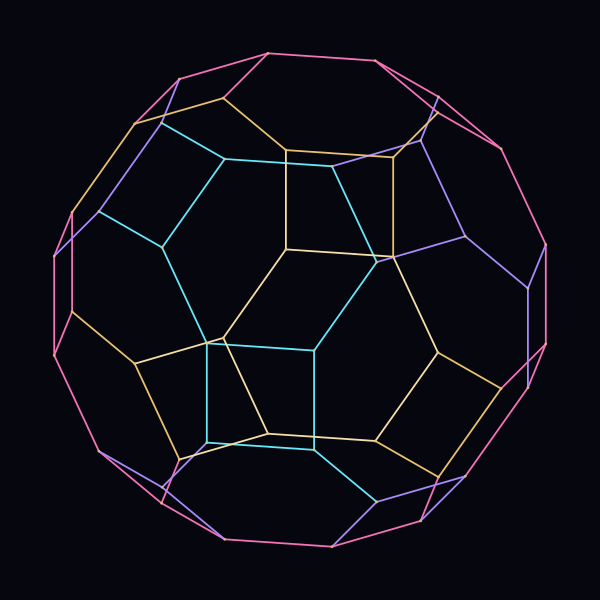
- Give one cap an eighth of a turn and you get a different solid with the same faces at every corner, yet no longer the same from every corner.
- Its dual, the deltoidal icositetrahedron, has 24 kites: a shape garnet crystals often grow in.
History and meaning
A glass rhombicuboctahedron, half-filled with water, hangs beside the mathematician Luca Pacioli in his portrait of 1495. Leonardo da Vinci drew it, solid and as an open frame, for Pacioli’s De Divina Proportione (1509).
Across the dimensions
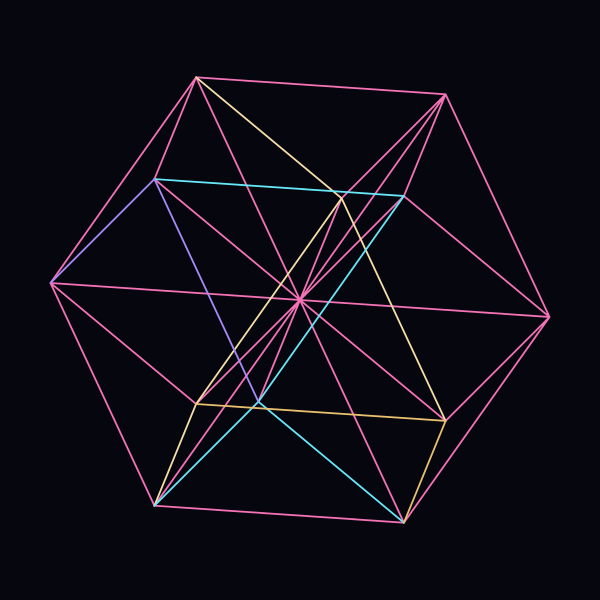
- Dual The deltoidal icositetrahedron, which the app draws inside it.
Learn it step by step
- Journey The Archimedean FamilyStep 8: Pull the faces apart