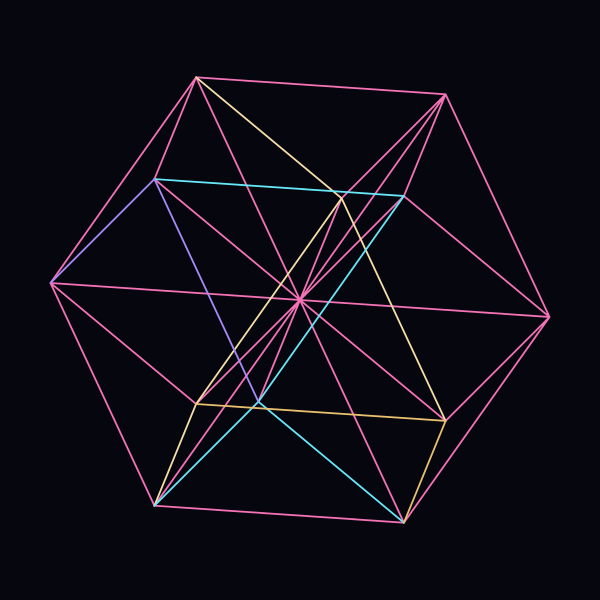
Archimedean Solids · 3D
Icosidodecahedron
3.5.3.5 · r{5,3}
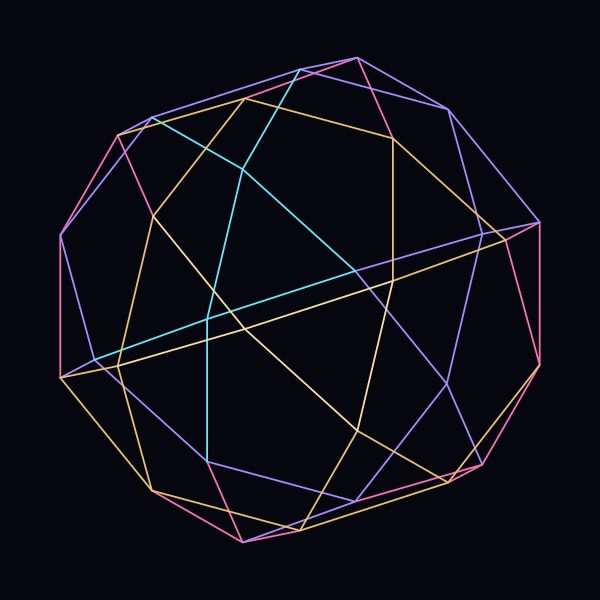
Twenty triangles and twelve pentagons, alternating around every corner: the golden twin of the vector equilibrium, sitting at the midpoints of the icosahedron’s edges and equally of the dodecahedron’s.
- Vertices
- 30
- Edges
- 60
- Faces
- 20 ▲ + 12 ⬟
- Great circles
- 6
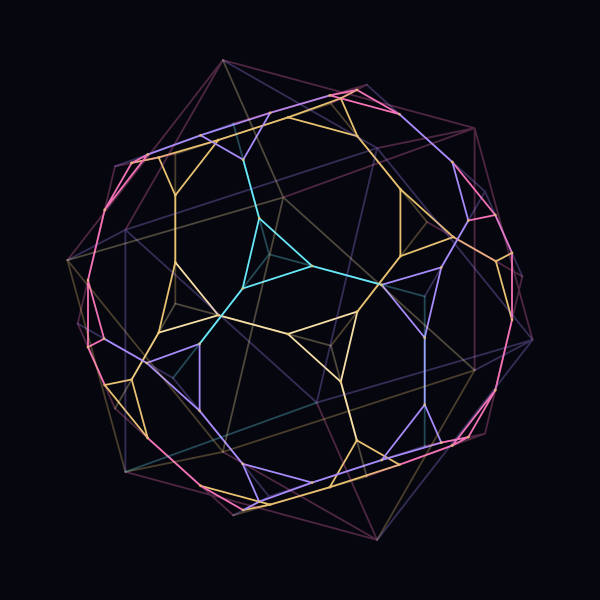
Turn it in your hands, strike it to hear the chord of its edges, slice it with a plane or lift it into four dimensions.
Facts
- Its 60 edges run around it as six regular decagons, each a great circle through its centre.
- Its corners are the edge midpoints of the icosahedron, and equally of the dodecahedron: the halfway point between the two.
- With the cuboctahedron it is one of only two quasi-regular solids: two kinds of face, taking turns around every corner.
- Pass the 600-cell corner-first through our space and at its middle this is the solid you find.
History and meaning
Leonardo da Vinci drew it for Pacioli’s De Divina Proportione (1509). It is the only Archimedean solid whose corners are simply the middles of the edges of both golden solids.
Across the dimensions
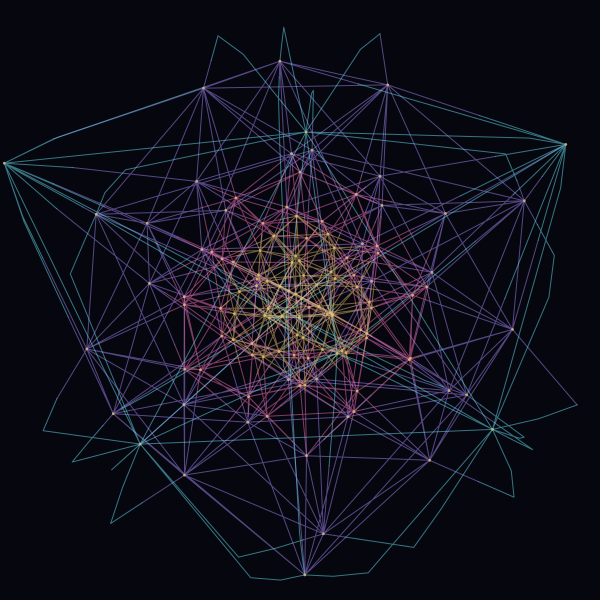
- Equator of 600-CellPass the 600-cell corner-first through our space: at its middle, thirty of its corners make the icosidodecahedron.
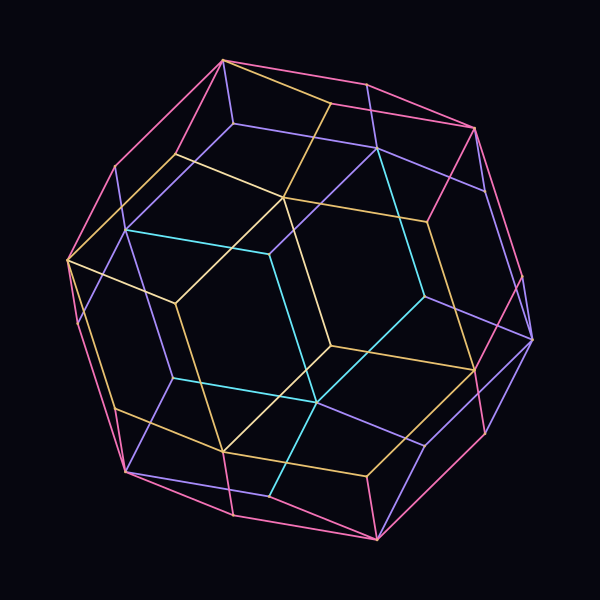
- Dual Rhombic Triacontahedron