Forms of the Plane · 3D
The Kepler Pyramid
A square pyramid on the Kepler triangle
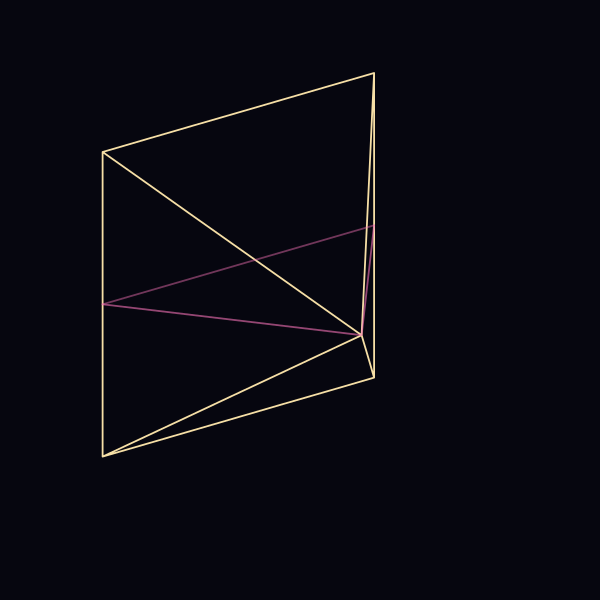
Stand two Kepler triangles back to back and spin the idea into a square pyramid: its faces slope at 51.83°, the angle of the Great Pyramid of Giza to within a few hundredths of a degree.
- Height
- √φ
- Face slope
- 51.83°
- Slant ÷ half base
- φ
Turn it in your hands, strike it to hear the chord of its edges, slice it with a plane.
Facts
- Its height squared equals the area of each triangular face: h² = φ = slant × half base.
- The slant height of each face is φ times half the base.
- Toggle the circle: with the height as radius, its circumference is 7.992 against a perimeter of 8. The π theory and the φ theory of the pyramid differ by only a tenth of a percent.
- Khufu’s pyramid: 230.3 m square and about 146.6 m high, a ratio of 1.273. The Kepler pyramid gives 1.272, the π pyramid 1.273.
History and meaning
Whether its builders meant φ, π, or simply a slope of 5½ palms of run for every cubit of 7 palms rise (the seked, the measure the Egyptians actually used, which gives 51.84°) cannot be settled from the stones: all three agree to within the precision of the masonry.
Across the dimensions
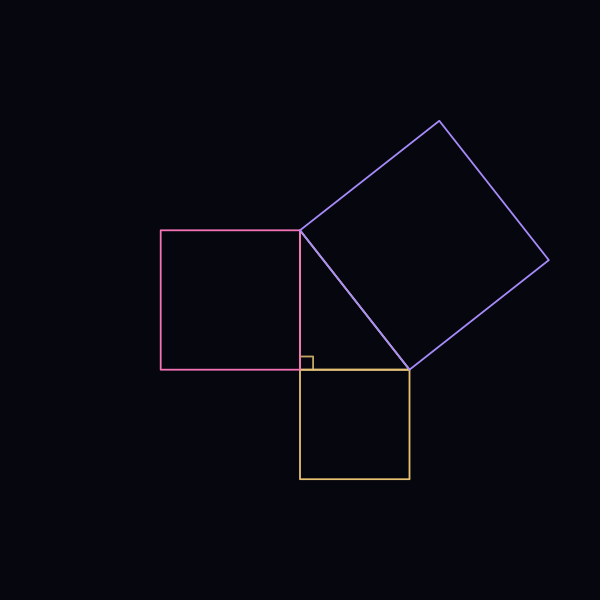
- Its slice Kepler TriangleTwo Kepler triangles back to back are the section of a square pyramid: turn it about its height and the pyramid rises.