Transformations · 4D
Tesseract to 16-Cell
Truncation in four dimensions
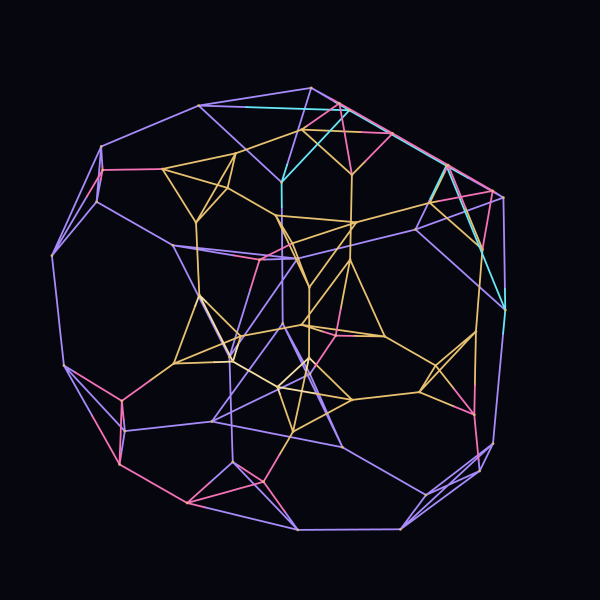
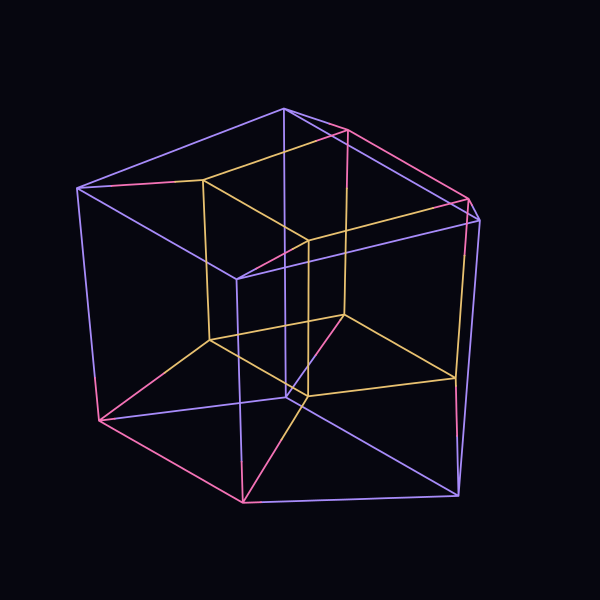
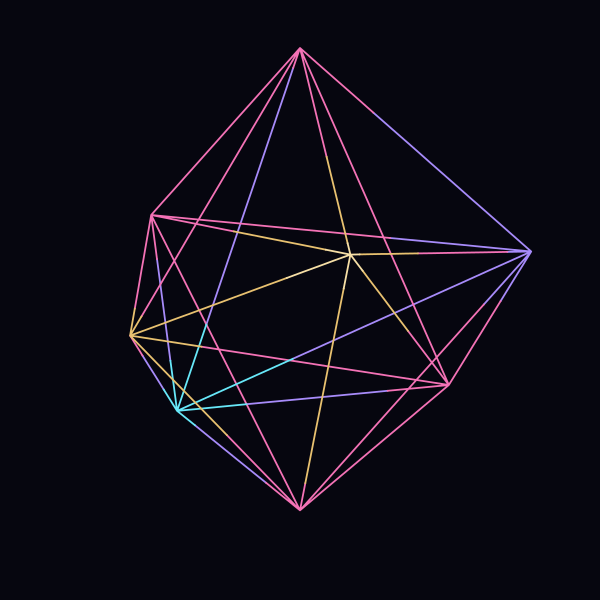
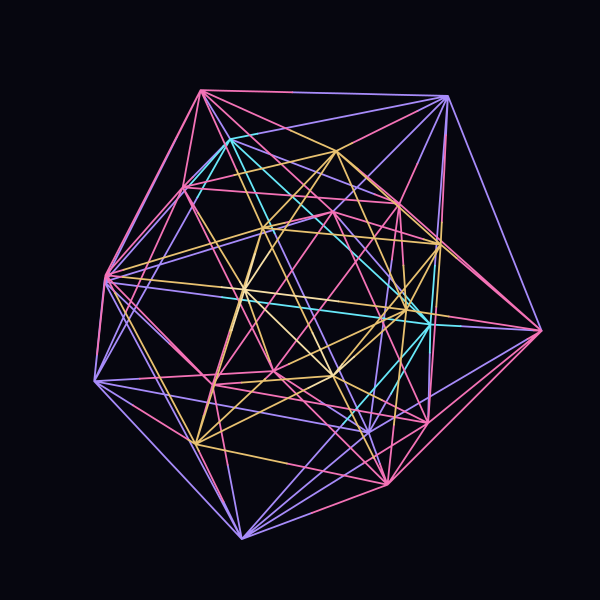
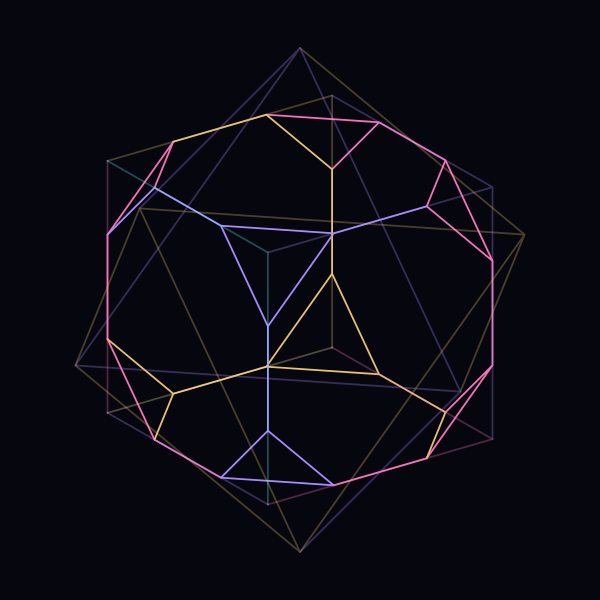
Cut the corners off a tesseract, as the cube was cut into the octahedron, and keep cutting. The tesseract passes through six more uniform polytopes, the 24-cell among them, before only the 16-cell is left.
- Uniform stops
- 7
- Symmetries
- 384
- Middle
- bitruncated
Watch it turn through the fourth dimension, hear the chord of its edges, and slice it with our space to see it pass through.
Facts
- Truncated tesseract: 8 truncated cubes and 16 tetrahedra. Rectified: 8 cuboctahedra and 16 tetrahedra.
- Halfway, the bitruncated tesseract (8 truncated octahedra and 16 truncated tetrahedra) is equally the bitruncated 16-cell: the cuts from both ends meet.
- Two thirds of the way the 24-cell appears: the 16-cell cut to its edge midpoints is the one regular shape with no 3D counterpart.
- Every stop is a Wythoff construction: one point moved inside a cell of mirrors and reflected into all 384 of the tesseract’s symmetries.
History and meaning
Alicia Boole Stott, who coined the word polytope, found these shapes around 1910 by expanding and cutting the regular ones, working with cardboard sections and no formal training. Coxeter later gave the method its algebra.