Forms of the Plane · 3D
Icosahedral Quasicrystal
Two golden rhombohedra, never repeating
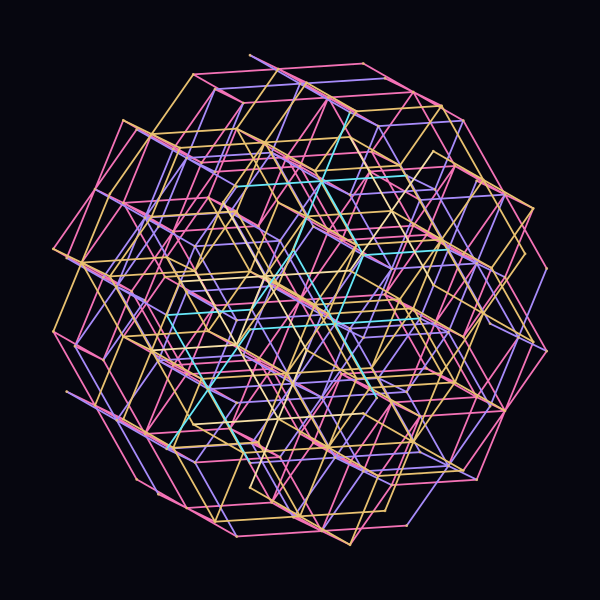
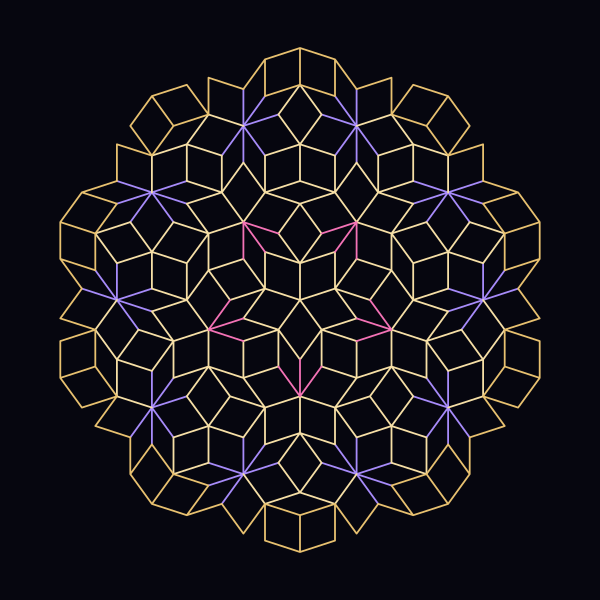
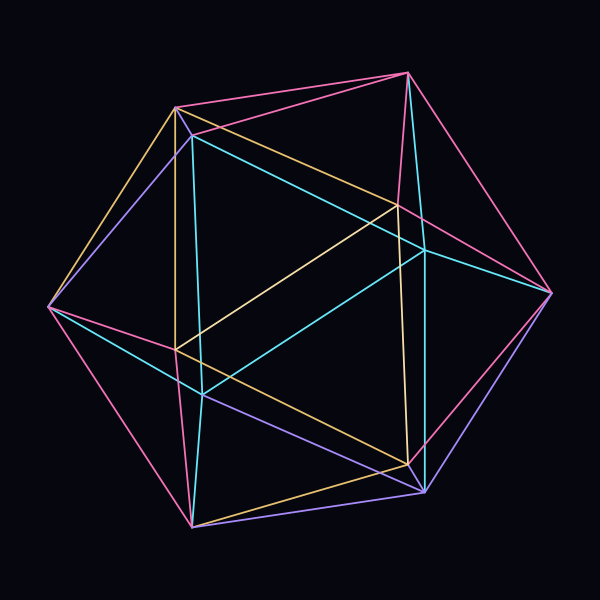
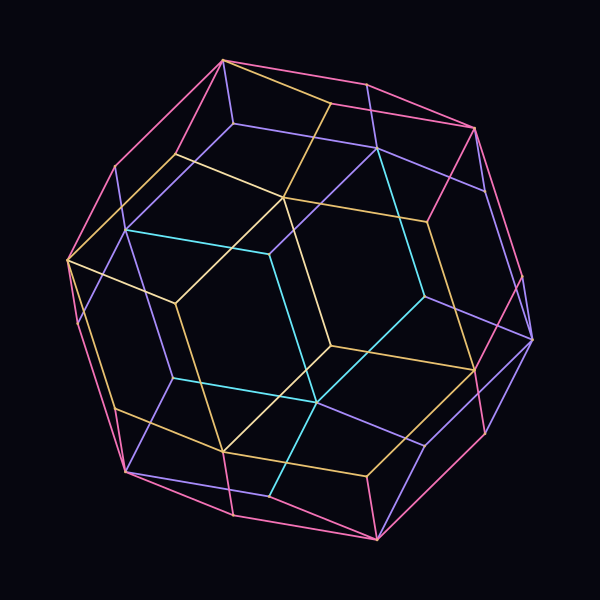
Penrose’s two rhombi have a sequel in space: a fat and a thin rhombohedron, every face a golden rhombus, that fill space without ever repeating. Around the centre twelve edges point to the corners of an icosahedron, a symmetry no crystal can have.
- Tiles
- 2 rhombohedra
- Symmetry
- icosahedral
- From
- 6D lattice
Turn it in your hands, strike it to hear the chord of its edges, slice it with a plane.
Facts
- The Penrose tiling is a slice of a five-dimensional lattice projected onto the plane. This is the same idea one step up: a slice of the six-dimensional cubic lattice, projected into space.
- Every face of both tiles is the same golden rhombus, with diagonals in the ratio φ.
- In a large region there are φ times as many fat rhombohedra as thin ones.
- Dan Shechtman’s first quasicrystal (1982) was icosahedral, an alloy of aluminium and manganese.
History and meaning
Robert Ammann found the two rhombohedra in 1976. Peter Kramer and Roberto Neri built the tiling from six dimensions in 1984, the same year Shechtman’s result was published and the physics of quasicrystals began.
Across the dimensions
- Rises from Penrose TilingOne dimension up, the two golden rhombi become two golden rhombohedra, filling space without ever repeating.