Journey 3 of 10 · 10 steps
Into the Fourth Dimension
Square → cube → tesseract → beyond
Learn to see four dimensions the way a flatlander would learn to see three: through shadows, slices and rotation.
In the app each step moves: figures draw themselves, rise from the page, turn and slice, and the narration can be read aloud. Here they are held still, one picture each.
-
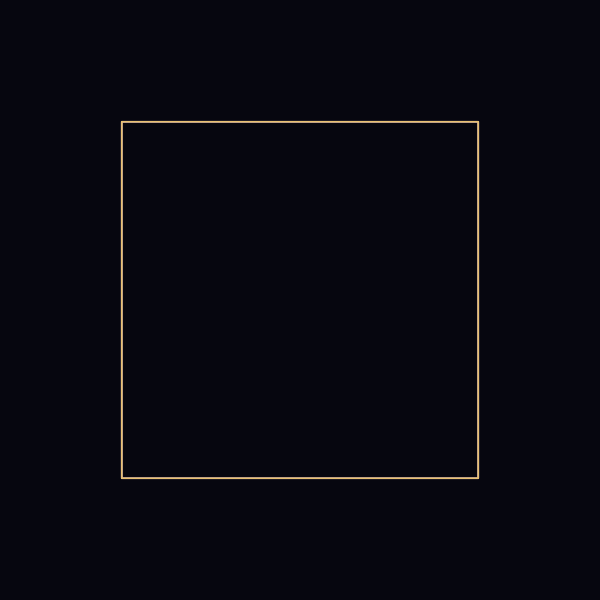
Step 1 · Cube
A square
Start with a square. Imagine you were a flat being who could only see the plane. How could we show you a cube?
-
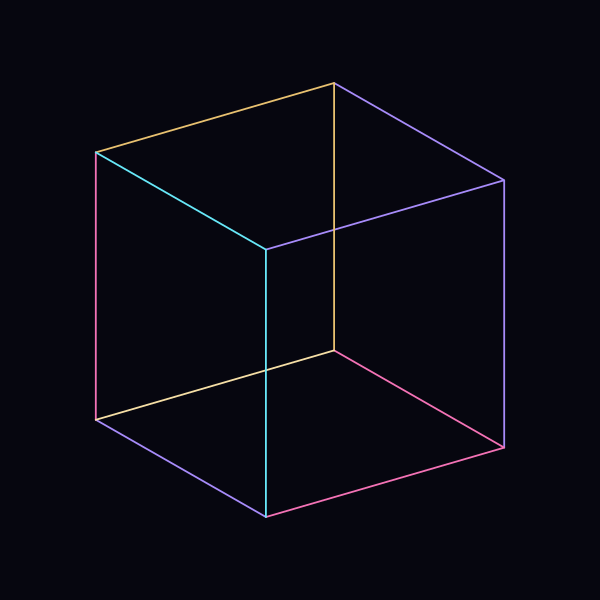
Step 2 · Cube
Pull it into depth
Drag the square in a direction you cannot point to, perpendicular to the page, and join old corners to new. That is a cube: 8 corners, 12 edges, 6 square faces.
-
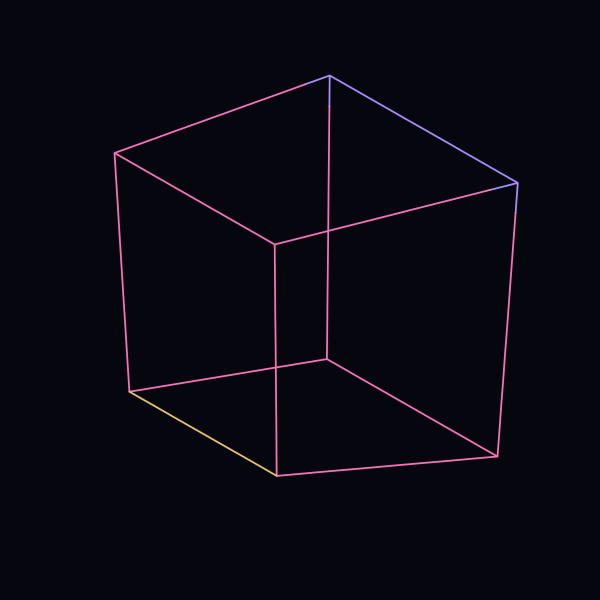
Step 3 · Tesseract
Now do it again
This looks like a cube. It is a tesseract seen with its fourth coordinate squashed flat, exactly as the square was the cube squashed flat.
-
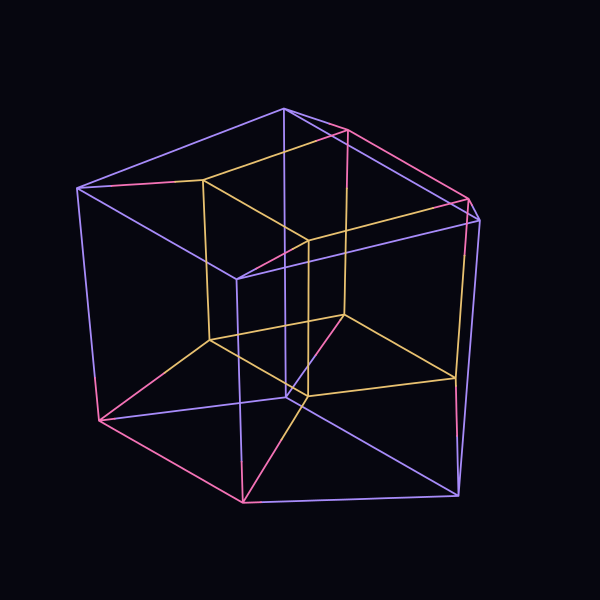
Step 4 · Tesseract
The tesseract
Release the fourth direction, W. A cube inside a cube appears: 16 corners, 32 edges, 8 cubic cells. Colour shows each point’s W coordinate.
-
Step 5 · Tesseract
Turning through W
Rotating in the XW plane makes the inner cube swell and swallow the outer one. Nothing bends: every cell stays a perfect cube, only our shadow distorts.
-
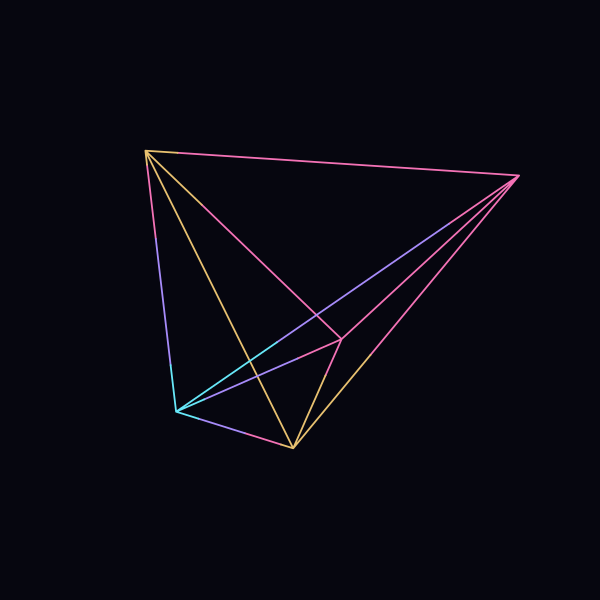
Step 6 · 5-Cell
The 4D triangle
The simplest 4D shape: five points, each joined to all the others. Point, segment, triangle, tetrahedron, 5-cell.
-
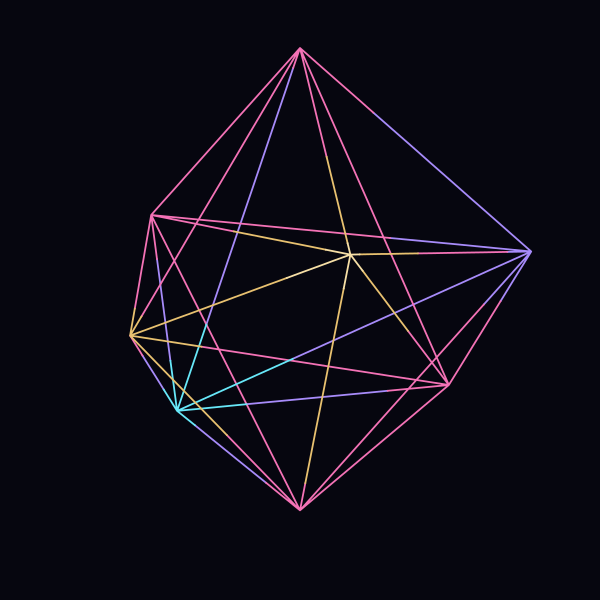
Step 7 · 16-Cell
The 16-cell
One point at each end of four perpendicular axes: the 4D octahedron, bounded by sixteen tetrahedra, the dual of the tesseract.
-
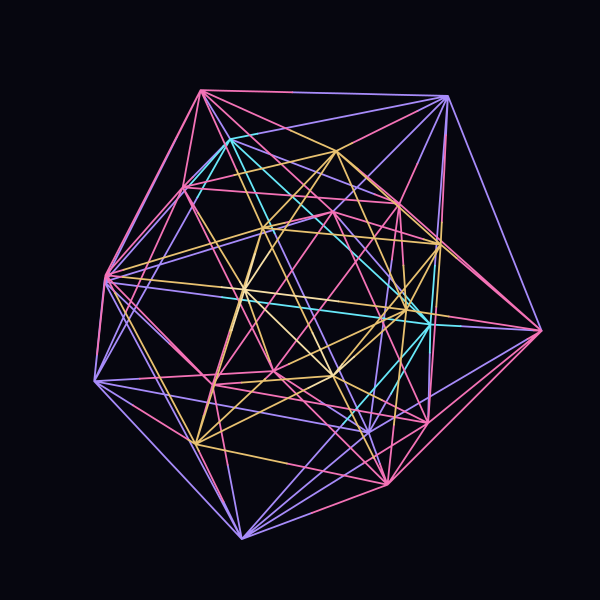
Step 8 · 24-Cell
A shape only 4D has
The 24-cell, built from 24 octahedra, has no equivalent in 2D, 3D, or any other dimension. It exists only here.
-
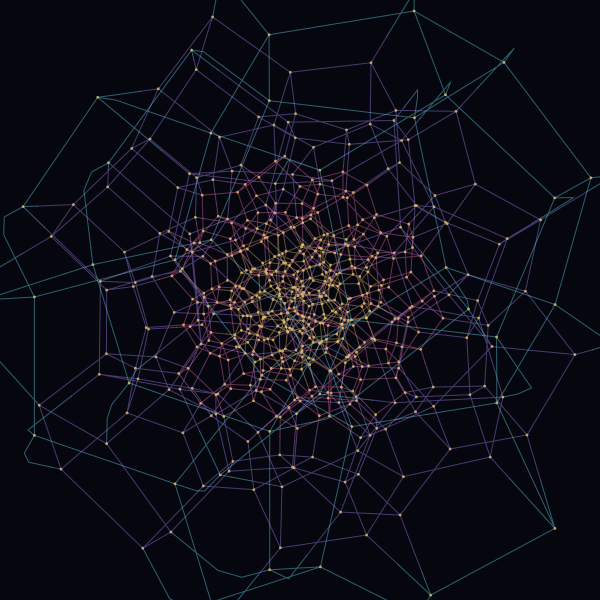
Step 9 · 120-Cell
The 120-cell
120 dodecahedra closing into a hypersphere. Stereographic projection maps that sphere into our space, turning straight edges into arcs, like a map of the globe.
-
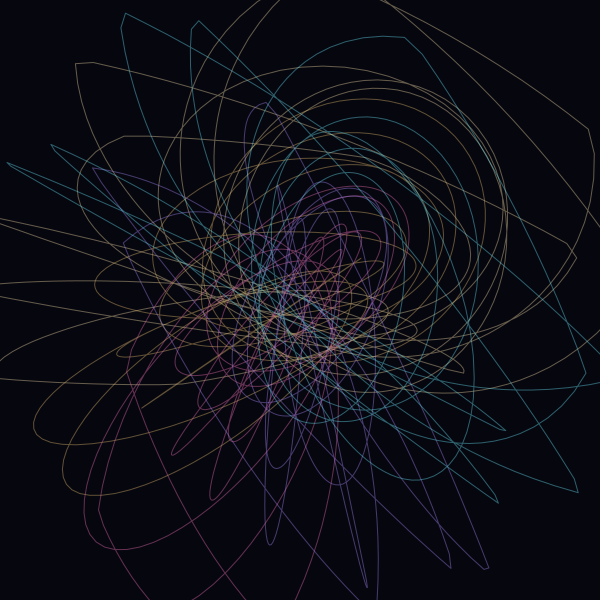
Step 10 · Hopf Fibration
The Hopf fibration
The 3-sphere can be filled entirely with circles, no two touching, every pair linked like chain links. Projected here, they nest into tori of rings.